Web cookies (also called HTTP cookies, browser cookies, or simply cookies) are small pieces of data that websites store on your device (computer, phone, etc.) through your web browser. They are used to remember information about you and your interactions with the site.
Purpose of Cookies:
Session Management:
Keeping you logged in
Remembering items in a shopping cart
Saving language or theme preferences
Personalization:
Tailoring content or ads based on your previous activity
Tracking & Analytics:
Monitoring browsing behavior for analytics or marketing purposes
Types of Cookies:
Session Cookies:
Temporary; deleted when you close your browser
Used for things like keeping you logged in during a single session
Persistent Cookies:
Stored on your device until they expire or are manually deleted
Used for remembering login credentials, settings, etc.
First-Party Cookies:
Set by the website you're visiting directly
Third-Party Cookies:
Set by other domains (usually advertisers) embedded in the website
Commonly used for tracking across multiple sites
Authentication cookies are a special type of web cookie used to identify and verify a user after they log in to a website or web application.
What They Do:
Once you log in to a site, the server creates an authentication cookie and sends it to your browser. This cookie:
Proves to the website that you're logged in
Prevents you from having to log in again on every page you visit
Can persist across sessions if you select "Remember me"
What's Inside an Authentication Cookie?
Typically, it contains:
A unique session ID (not your actual password)
Optional metadata (e.g., expiration time, security flags)
Analytics cookies are cookies used to collect data about how visitors interact with a website. Their primary purpose is to help website owners understand and improve user experience by analyzing things like:
How users navigate the site
Which pages are most/least visited
How long users stay on each page
What device, browser, or location the user is from
What They Track:
Some examples of data analytics cookies may collect:
Page views and time spent on pages
Click paths (how users move from page to page)
Bounce rate (users who leave without interacting)
User demographics (location, language, device)
Referring websites (how users arrived at the site)
Here’s how you can disable cookies in common browsers:
1. Google Chrome
Open Chrome and click the three vertical dots in the top-right corner.
Go to Settings > Privacy and security > Cookies and other site data.
Choose your preferred option:
Block all cookies (not recommended, can break most websites).
Block third-party cookies (can block ads and tracking cookies).
2. Mozilla Firefox
Open Firefox and click the three horizontal lines in the top-right corner.
Go to Settings > Privacy & Security.
Under the Enhanced Tracking Protection section, choose Strict to block most cookies or Custom to manually choose which cookies to block.
3. Safari
Open Safari and click Safari in the top-left corner of the screen.
Go to Preferences > Privacy.
Check Block all cookies to stop all cookies, or select options to block third-party cookies.
4. Microsoft Edge
Open Edge and click the three horizontal dots in the top-right corner.
Go to Settings > Privacy, search, and services > Cookies and site permissions.
Select your cookie settings from there, including blocking all cookies or blocking third-party cookies.
5. On Mobile (iOS/Android)
For Safari on iOS: Go to Settings > Safari > Privacy & Security > Block All Cookies.
For Chrome on Android: Open the app, tap the three dots, go to Settings > Privacy and security > Cookies.
Be Aware:
Disabling cookies can make your online experience more difficult. Some websites may not load properly, or you may be logged out frequently. Also, certain features may not work as expected.
Smoke from distant forest fires blows into our communities for days at a time. Most neighbors have multiple gas-powered lawn care products that pollute at a higher rate than cars. The quality across the nation has struggled as 44% of Americans live in places with failing grades for unhealthy levels of air pollution, according to the “State of the Air” report published by the American Lung Association. Under the guidance of IMS Polymer Faculty member Douglas Adamson, students from his lab have created AeroGraphiX, a company developing high-tech High-Efficiency Particulate Air (HEPA) filters.
AeroGraphiX uses materials with properties unique to the industry. The filter fibers have a graphene coating which makes them conductive and allows them to maintain an electric charge to increase efficiency. It also allows the filters to include real-time monitoring. Standard air filters can retain moisture and therefore act as catalysts for microbes, however, AeroGraphiX materials are being evaluated for anti-microbial and anti-viral properties. AeroGraphiX materials are also scalable, therefore making them practical for large scale industrial production. These unique properties inspired Dr. Adamson to file a Patent with Robert Minh Lu Williams. Meanwhile, Deep Srivastava and Brenden Ferland have created the company, AeroGraphiX, to further develop the materials and build a commercial product.
The AeroGraphiX team has gained attention as well as funding support from the Entrepreneurship Fellowship Prototyping Grant, Amazon AWS Credits, University of Connecticut CCEI – Get Seeded Award, UConn CCEI Summer Accelerator, Regional NSF iCorps, and UConn 3rd Innovative Health Pitch Fest 2026.
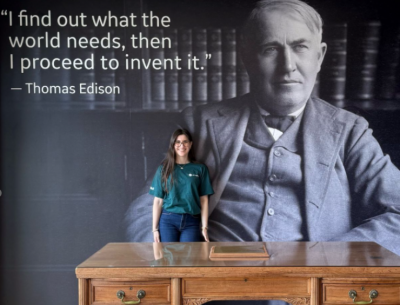
Antigoni Konstantinou stands in front of a picture of Thomas Edison.
This past summer, Antigoni Konstantinou, a PhD Candidate in the IMS Materials Science Program, spent her summer at GE Vernova’s Advanced Research Center in Niskayuna, NY — a company whose roots trace back to Thomas Edison! Working on generator and transformer insulation materials, Antigoni brought a background in materials science and expertise in high voltage insulation materials to a team tackling real industrial challenges in energy technology.
The summer was packed with unforgettable moments: running first-time high-potential tests up to 70kV, touring a generator manufacturing facility in downtown Schenectady, and sitting down one-on-one with researchers whose published papers Antigoni had studied long before meeting them in person.
What stood out most, though, were the people. Antigoni worked closely with mentors who were genuinely invested in her growth, offering guidance, encouragement, and the kind of support that turns a good internship into a great one. That mentorship didn’t just shape the experience — it shaped the research itself and reinforced her passion for materials science and its role in powering the future of energy.
Storrs, CT — May 21, 2026 — The University of Connecticut’s Institute of Materials Science (IMS) hosted its annual Industrial Affiliates Program (IAP) Meeting on May 21, bringing together faculty, researchers, students, and industry partners to highlight cutting-edge research, expanding capabilities, and the continued importance of collaboration between academia and industry.
The event opened with remarks from Dr Hatice Bodugoz Senturk, the co-director of the Industrial Affiliates Program for more than a decade. Hatice welcomed attendees and recognized the collective efforts of faculty, staff, technical teams, and students in organizing the meeting. She also acknowledged the retirement of longtime contributor Rhonda Ward who is enjoying retirement after joining IMS in 2013. Hatice introduced Breanna Robbins, her partner in supporting the IAP program, noting her strong technical expertise and collaborative leadership.
Breanna provided an overview of IMS’s growing technical capabilities, emphasizing the institute’s ability to integrate multiple analytical techniques to solve complex industry challenges. She noted that many projects require two or more methods, underscoring the depth and flexibility of IMS resources. Attendees were also introduced to new instrumentation, including advanced microscopes and a nuclear magnetic resonance (NMR) system currently being installed, further strengthening the institute’s research and industry support infrastructure.
Dr. Steven Suib, Director of IMS, highlighted the institute’s continued growth and research impact. He outlined recent investments in advanced equipment and reaffirmed IMS’s commitment to maintaining compliance with federal standards such as EAR, CUI, and ITAR. Suib also emphasized the value of interdisciplinary collaboration across UConn, pointing to opportunities that bring together materials science, polymer research, and biological sciences to drive innovation. The IAP program continues to expand, now comprising 38 members across a range of industries.
Attendees of IAP Annual Meeting (Terry Barber-Tournaud / UConn Photo)
Faculty presentations showcased a broad range of expertise and emerging research areas. Dr. Avinash Dangare, Head of Materials Science and Engineering, discussed research on materials under extreme conditions, including the use of high-energy laser systems to study material behavior. Dr. Miu-Ping Nieh highlighted the continued growth of UConn’s Polymer Program and introduced a new international collaboration with the South China University of Technology (SCUT), set to begin in Fall 2026.
Additional presentations featured advancements in micro-mechanical testing by Dr. Seok-Woo Lee, enabling more precise modeling of material performance, and entrepreneurship-focused research by Dr. Mingyu Qiao, who shared insights from his startup experience, including securing $6 million in federal SBIR funding. Dr. Menka Jain presented her work on energy-related and quantum materials, emphasizing their importance in next-generation technologies.
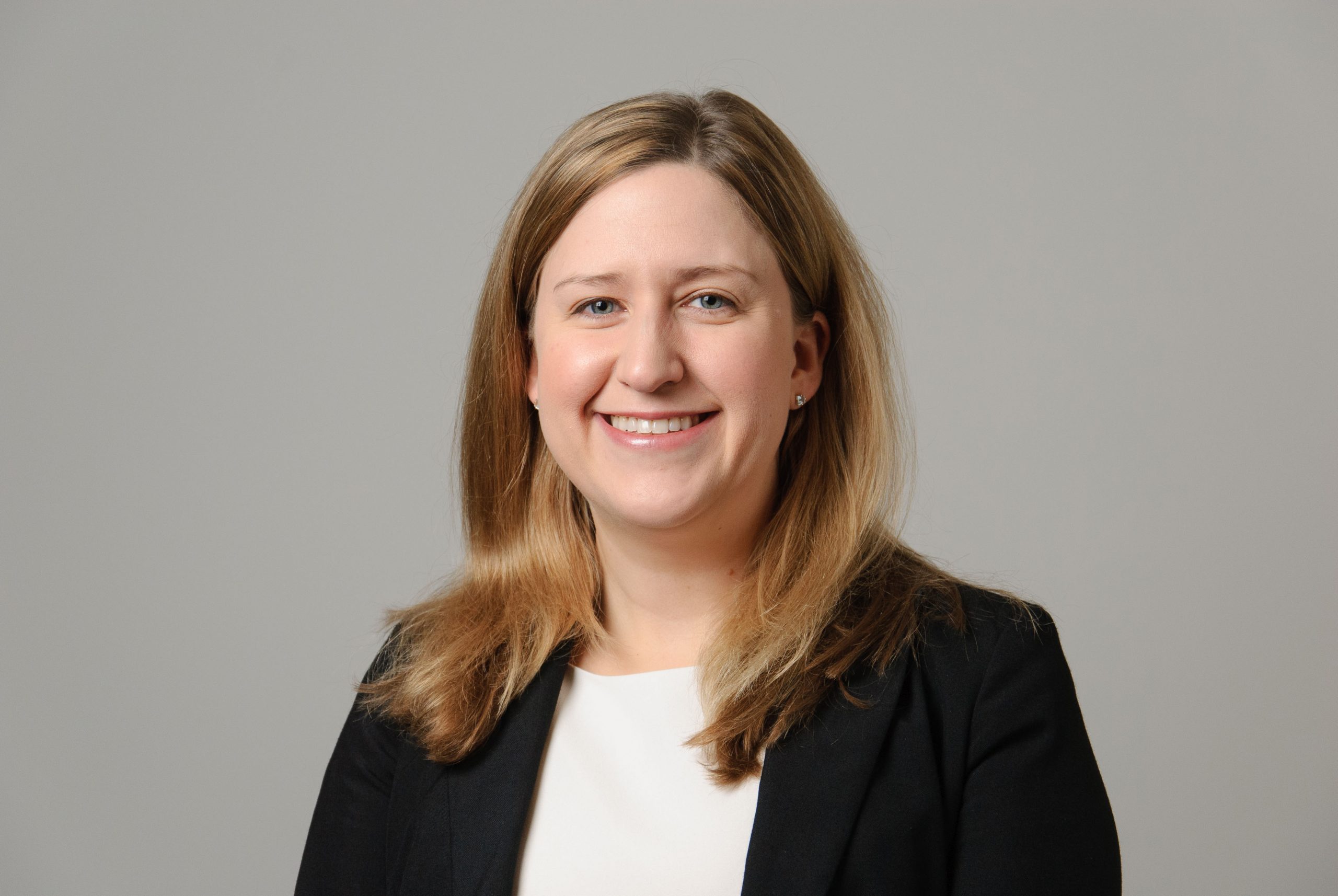
Kirti Patel, Chief Manufacturing Officer for the Connecticut Department of Economic and Community Development. (Terry Barber-Tournaud / UConn Photo)
The keynote address was delivered by Kirti Patel, Chief Manufacturing Officer for the Connecticut Department of Economic and Community Development. Patel highlighted Connecticut’s strong economic growth, driven in part by engineering, research and development, and healthcare sectors. He emphasized the critical role programs like IAP play in connecting academic research with industry needs, supporting workforce development, and driving innovation.
A key theme of Patel’s remarks was the need to reduce “friction” — barriers such as limited awareness, inefficient processes, and unclear value propositions. He encouraged organizations to more clearly communicate their capabilities, proactively engage industry partners, and identify measurable outcomes that demonstrate value. Addressing workforce shortages and retaining talent within the state were also identified as ongoing priorities for the State of Connecticut as it continues to support manufacturing as a major growth area for Connecticut and the region.
The meeting concluded with closing remarks from the co-directors, Hatice and Breanna, who thanked attendees and reinforced the importance of continued engagement and partnership.
The 2026 IAP Annual Meeting highlighted IMS’s role as a hub for innovation, collaboration, and workforce development, underscoring its impact on both academic research and the broader industrial community.
Written by Terry Barber-Tournaud
Edited by Breanna Robbins and Hatice Bodugoz Senturk
In a study publishing April 30 in the Cell Press journal Chem Circularity, a team of scientists and engineers demonstrates a stretchy, hemp-derived thermoplastic that can extend up to 1,600% of its size. The material has a high “glass transition temperature,” a quality that allows plastics to stay dry and durable when they come into contact with boiling hot water. IMS faculty, Professor Gregory Sotzing, has developed a high-temperature thermoplastic polycarbonate from naturally sourced Cannabidiol (CBD) extract from hemp flower that matches Polyethyleneterephthalate (PET) mechanical properties.
As the global pollution crisis caused by manufacturing and disposing of single-use plastics continues to grow, researchers have developed a non-toxic plastic alternative derived from the hemp plant—a non-psychoactive type of cannabis. Read more
IMS resident faculty member, Doug Adamson, Ph.D., has been honored by the College of Liberal Arts and Sciences (CLAS) for his commitment to mentoring faculty members. The CLAS Faculty Mentoring Awards recognize faculty who demonstrate exemplary support, encouragement, and the creation of opportunities to enrich the learning and professional development of others.
Doug Adamson, professor of chemistry, was recognized for his long-standing commitment to mentoring faculty. His work includes both practical and intellectual support, helping faculty navigate institutional processes, build research programs, and succeed at every stage of their careers. His mentorship has led to major collaborations, including grant funding, patents, and the founding of a company.
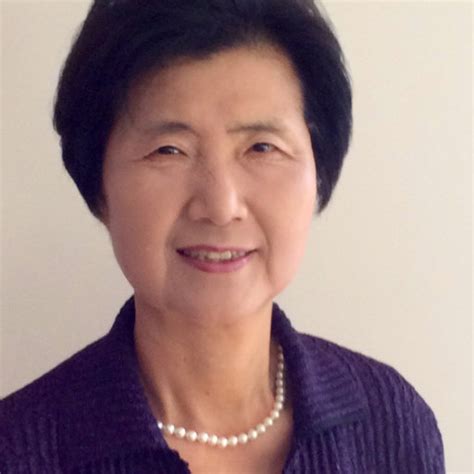
Dr. Chong Sook P. Sung served as director of the IMS Polymer Program from 1998 to 2002.
Dr. Chong Sook P. Sung, former director of the IMS Polymer Program and professor emeritus in the University of Connecticut’s Department of Chemistry, has made a generous $50,000 endowment to expand opportunities for polymer program students. The fund will provide support for conference travel and other professional development activities—experiences that can be pivotal in shaping early research careers.
For Dr. Sung, the gift is both practical and personal. Reflecting on her own path at UConn, she noted that standing out as a woman and an international scholar required creativity and persistence—especially when it came to building support for research.
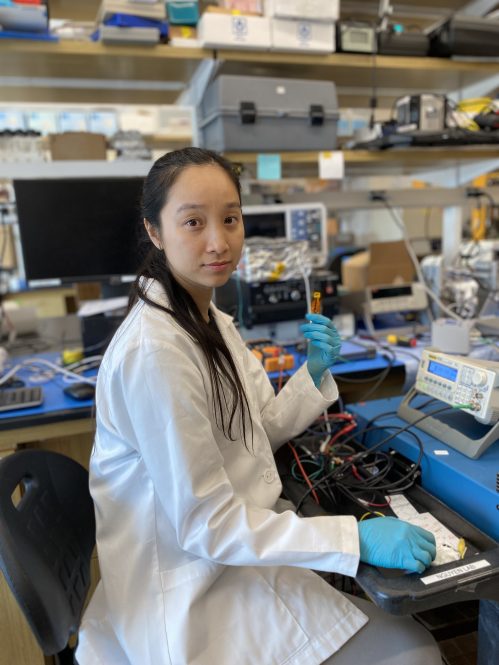
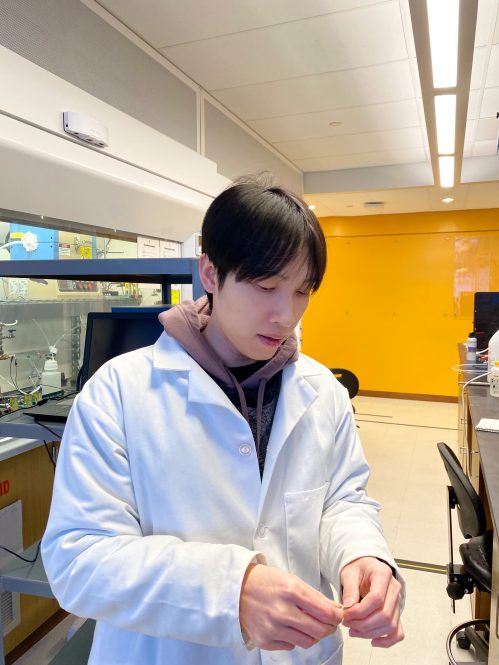
Postdoc Cao Thuy Giang NguyenPostdoc Hoang Quan Truong
When postdoctoral researchers Hoang Quan Truong and Cao Thuy Giang Nguyen arrived at UConn in the spring of 2025, they brought with them more than technical expertise. They carried a global perspective shaped by years of international experiences and a common goal of improving lifesaving treatments around the world.
UConn’s international research community plays a vital role in driving this work forward. Through the J-1 Exchange Visitor Program, scholars like Giang and Quan bring diverse experiences and ideas to campus, strengthening interdisciplinary collaboration. Originally from Vietnam, the married couple completed their Ph.D. programs in South Korea before spending a year as postdoctoral researchers at the University of Massachusetts Lowell. These experiences broadened their scientific outlook and prepared them for the collaborative research environment they were seeking next.
That search led them to the Nguyen Research Group under Thanh Nguyen, an associate professor in the College of Engineering’s School of Mechanical, Aerospace, and Manufacturing Engineering. The pair were drawn to the Nguyen Group’s innovative approach and diverse group of researchers, looking for a place that would provide strong industry connections and a supportive environment. At the intersection of biomaterials, nano/micro-technology, and medicine, this would be the perfect place to build upon seven years of prior research for Giang and Quan.
With support from the New York Consortium for Space Technology, UConn and Union College will collaborate to complete a mission for high altitude balloon testing of solid-state actuator used to augment glove functionality for astronauts, as well as a spintronic thermal sensor for space structures. Mihai Duduta represents UConn in the collaboration.
Conducting high altitude balloon testing provides experiential learning to graduate and undergraduate students via full missions, and brings different student majors (e.g. physics, chemistry, computer science) into the space engineering ecosystem. Full testing of devices in the stratosphere will raise the technology readiness level of actuators and sensors to a TRL 6, enabling collaborations with government and commercial entities focused on space.
The National Institutes of Health (NIH) has awarded a $2.7 million R18 grant to Kelly Burke, professor and department head of the Chemical & Biomolecular Engineering Department at the University of Connecticut (UConn), to develop implantable drug‑delivery films designed to relieve pain after surgery. The project is funded under the NIH HEAL (Helping to End Addiction Long‑term) Initiative, which backs technologies and strategies that help prevent opioid misuse—in this case by reducing the need to prescribe opioids following common surgical procedures.
The award supports a multidisciplinary team spanning engineering, pharmacy, and medicine. In addition to Burke, the project includes Bin Feng (Biomedical Engineering), Xiuling Lu (Pharmacy), and Courtney Rowe (UConn Health/Connecticut Children’s). Together, the team will design, fabricate, and evaluate thin, biocompatible films that deliver non‑opioid therapeutics directly at the surgical site, targeting the source of pain while minimizing systemic exposure.
Opioids remain a standard option for managing acute post‑operative pain, but they also carry well‑documented risks, including misuse and dependence. By bringing pain relief to the point of need, implantable films could cut the number and strength of opioid prescriptions required after surgery—offering clinicians a practical tool to improve recovery and help protect patients and families from downstream harm.
R18 awards are intended to develop, test, and evaluate health service activities, and to foster the application of existing knowledge to improve health outcomes across defined conditions. Backed by this mechanism, the UConn‑led team will integrate materials science, drug‑delivery expertise, and clinical perspectives to optimize the films’ performance and assess their potential to translate into routine surgical care.
Kelly Burke’s research focuses on biomaterials and drug delivery, with an emphasis on polymer‑based solutions that improve patient care. Burke’s leadership in cross‑disciplinary teams, together with UConn’s strengths in engineering, pharmacy, and clinical medicine, underpins this NIH‑supported effort to create safer, more effective post‑operative pain management options.




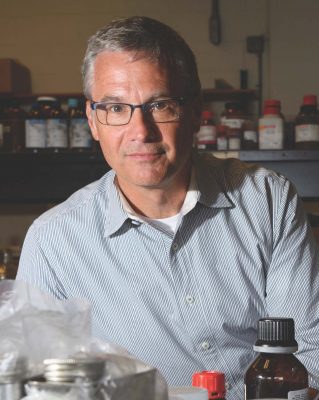 IMS resident faculty member, Doug Adamson, Ph.D., has been honored by the College of Liberal Arts and Sciences (CLAS) for his commitment to mentoring faculty members. The CLAS Faculty Mentoring Awards recognize faculty who demonstrate exemplary support, encouragement, and the creation of opportunities to enrich the learning and professional development of others.