A Hemp-based Thermoplastic Offers a Greener Alternative to Plastic Packaging

April 30, 2026

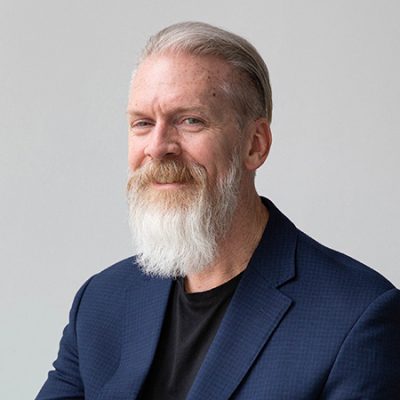
Professor Gregory Sotzing

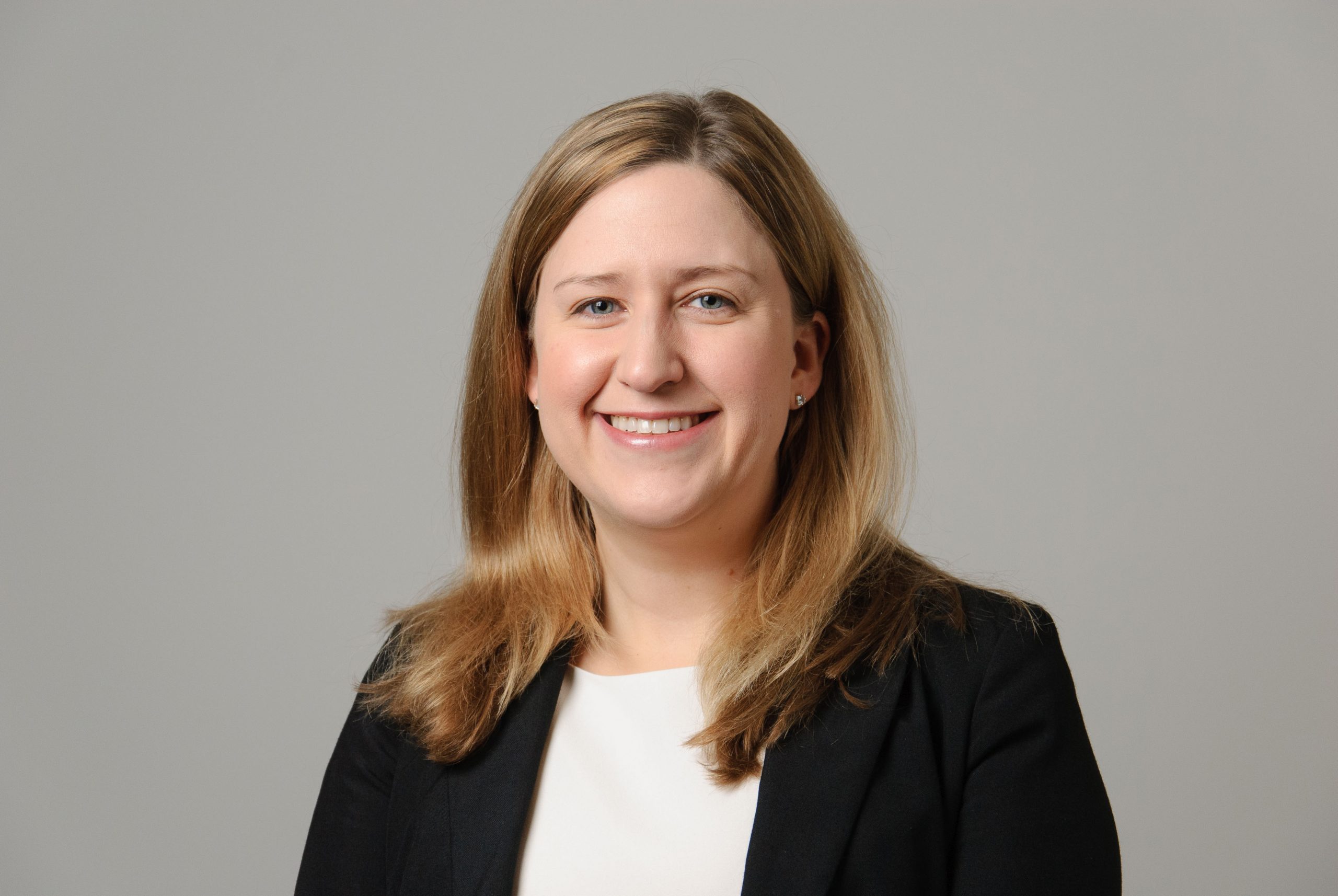
In a study publishing April 30 in the Cell Press journal Chem Circularity, a team of scientists and engineers demonstrates a stretchy, hemp-derived thermoplastic that can extend up to 1,600% of its size. The material has a high “glass transition temperature,” a quality that allows plastics to stay dry and durable when they come into contact with boiling hot water. IMS faculty, Professor Gregory Sotzing, has developed a high-temperature thermoplastic polycarbonate from naturally sourced Cannabidiol (CBD) extract from hemp flower that matches Polyethyleneterephthalate (PET) mechanical properties.

As the global pollution crisis caused by manufacturing and disposing of single-use plastics continues to grow, researchers have developed a non-toxic plastic alternative derived from the hemp plant—a non-psychoactive type of cannabis. Read more


Doug Adamson Honored by CLAS with Faculty Mentoring Award

April 24, 2026

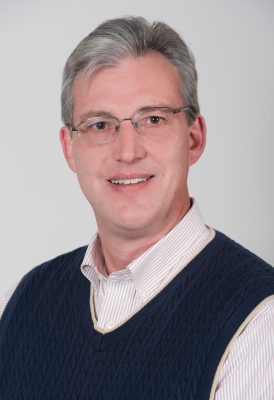
Douglas AdamsonIMS resident faculty member, Doug Adamson, Ph.D., has been honored by the College of Liberal Arts and Sciences (CLAS) for his commitment to mentoring faculty members.  The CLAS Faculty Mentoring Awards recognize faculty who demonstrate exemplary support, encouragement, and the creation of opportunities to enrich the learning and professional development of others.
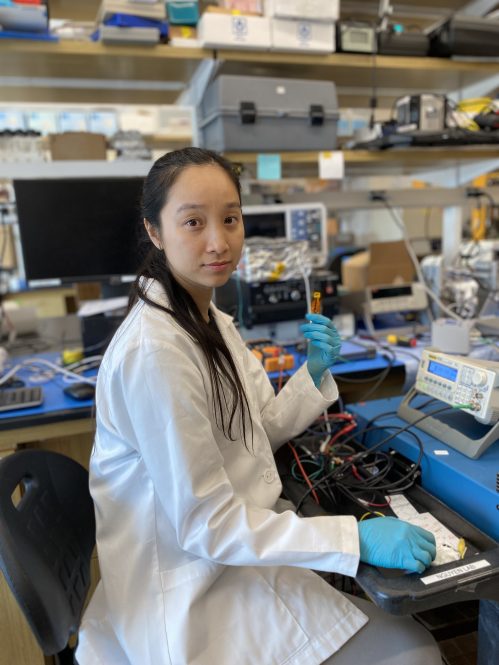
Doug Adamson, professor of chemistry, was recognized for his long-standing commitment to mentoring faculty. His work includes both practical and intellectual support, helping faculty navigate institutional processes, build research programs, and succeed at every stage of their careers. His mentorship has led to major collaborations, including grant funding, patents, and the founding of a company.

Read the full CLAS story

Dr. Chong Sook P. Sung Establishes $50,000 Endowment to Support IMS Polymer Program Students

March 23, 2026

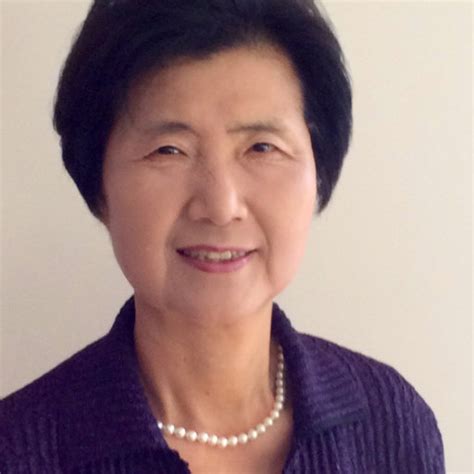
Chong Sook P. Sung
Dr. Chong Sook P. Sung served as director of the IMS Polymer Program from 1998 to 2002.

Dr. Chong Sook P. Sung, former director of the IMS Polymer Program and professor emeritus in the University of Connecticut’s Department of Chemistry, has made a generous $50,000 endowment to expand opportunities for polymer program students. The fund will provide support for conference travel and other professional development activities—experiences that can be pivotal in shaping early research careers.

For Dr. Sung, the gift is both practical and personal. Reflecting on her own path at UConn, she noted that standing out as a woman and an international scholar required creativity and persistence—especially when it came to building support for research.

Read the full Story at UConn Today


Wen Zhao Published in Journal of Materials Chemistry A

March 9, 2026

Wen Zhao, Ph.D.
Wen Zhao, Ph.D.

The Institute of Materials Science (IMS) congratulates Dr. Wen Zhao whose article, Stable Oxygen Reduction Catalysts for Enhancing Rechargeability for Zinc–Air Batteries: FeCoCu Nanoparticles Embedded in N-Doped Carbon Matrices, has been published in the Journal of Materials Chemistry A.  Dr. Zhao completed her Ph.D. in 2024 under the advisement of Dr. Steven L. Suib, Director of IMS. The article is published as part of the publication’s celebration of International Women’s Day 2026.

Postdocs from Thanh Nguyen Lab Pioneer New Frontiers in Drug and Vaccine Delivery

March 5, 2026

Postdoc Cao Thuy Giang Nguyen
Postdoc Hoang Quan Truong

When postdoctoral researchers Hoang Quan Truong and Cao Thuy Giang Nguyen arrived at UConn in the spring of 2025, they brought with them more than technical expertise. They carried a global perspective shaped by years of international experiences and a common goal of improving lifesaving treatments around the world.

UConn’s international research community plays a vital role in driving this work forward. Through the J-1 Exchange Visitor Program, scholars like Giang and Quan bring diverse experiences and ideas to campus, strengthening interdisciplinary collaboration. Originally from Vietnam, the married couple completed their Ph.D. programs in South Korea before spending a year as postdoctoral researchers at the University of Massachusetts Lowell. These experiences broadened their scientific outlook and prepared them for the collaborative research environment they were seeking next.

That search led them to the Nguyen Research Group under Thanh Nguyen, an associate professor in the College of Engineering’s School of Mechanical, Aerospace, and Manufacturing Engineering. The pair were drawn to the Nguyen Group’s innovative approach and diverse group of researchers, looking for a place that would provide strong industry connections and a supportive environment. At the intersection of biomaterials, nano/micro-technology, and medicine, this would be the perfect place to build upon seven years of prior research for Giang and Quan.

Read the full story at UConn Today

UConn Team Wins Award to Test Robots in the Stratosphere

February 26, 2026

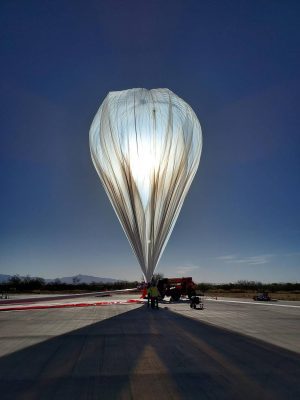
(NASA image)

With support from the New York Consortium for Space Technology, UConn and Union College will collaborate to complete a mission for high altitude balloon testing of solid-state actuator used to augment glove functionality for astronauts, as well as a spintronic thermal sensor for space structures. Mihai Duduta represents UConn in the collaboration.

Conducting high altitude balloon testing provides experiential learning to graduate and undergraduate students via full missions, and brings different student majors (e.g. physics, chemistry, computer science) into the space engineering ecosystem. Full testing of devices in the stratosphere will raise the technology readiness level of actuators and sensors to a TRL 6, enabling collaborations with government and commercial entities focused on space.

(Contact Mihai Duduta (mihai.duduta@uconn.edu) if you are interested in contributing.

NIH Awards $2.7M to Kelly Burke and Team to Advance Implantable Films for Post Surgical Pain Relief

September 26, 2025

Dr. Kelly Burke
Kelly Burke (Peter Morenus/UConn Photo)

The National Institutes of Health (NIH) has awarded a $2.7 million R18 grant to Kelly Burke, professor and department head of the Chemical & Biomolecular Engineering Department at the University of Connecticut (UConn), to develop implantable drug‑delivery films designed to relieve pain after surgery. The project is funded under the NIH HEAL (Helping to End Addiction Long‑term) Initiative, which backs technologies and strategies that help prevent opioid misuse—in this case by reducing the need to prescribe opioids following common surgical procedures.

The award supports a multidisciplinary team spanning engineering, pharmacy, and medicine. In addition to Burke, the project includes Bin Feng (Biomedical Engineering), Xiuling Lu (Pharmacy), and Courtney Rowe (UConn Health/Connecticut Children’s). Together, the team will design, fabricate, and evaluate thin, biocompatible films that deliver non‑opioid therapeutics directly at the surgical site, targeting the source of pain while minimizing systemic exposure.

Opioids remain a standard option for managing acute post‑operative pain, but they also carry well‑documented risks, including misuse and dependence. By bringing pain relief to the point of need, implantable films could cut the number and strength of opioid prescriptions required after surgery—offering clinicians a practical tool to improve recovery and help protect patients and families from downstream harm.

R18 awards are intended to develop, test, and evaluate health service activities, and to foster the application of existing knowledge to improve health outcomes across defined conditions. Backed by this mechanism, the UConn‑led team will integrate materials science, drug‑delivery expertise, and clinical perspectives to optimize the films’ performance and assess their potential to translate into routine surgical care.

Kelly Burke’s research focuses on biomaterials and drug delivery, with an emphasis on polymer‑based solutions that improve patient care. Burke’s leadership in cross‑disciplinary teams, together with UConn’s strengths in engineering, pharmacy, and clinical medicine, underpins this NIH‑supported effort to create safer, more effective post‑operative pain management options.

Dr. George A. Rossetti, Jr. Retires

August 5, 2025

from Materials Science & Engineering Department

George A. Rossetti, Jr.
Dr. George A. Rossetti, Jr.

Materials Science and Engineering Department (MSE) Head Dr. Bryan Huey congratulated MSE colleague, Dr. George A. Rossetti, Jr., who’s retirement began on August 5, 2025.

Dr. Huey, in announcing Rossetti’s retirement, noted that he is “personally very grateful to George for his friendship, support, intellectual discussions, and advocacy for student opportunities and success.”

George is a renowned expert in electroceramics, with a particular focus on correlations between structure and functional properties and more than 6000 citations throughout his illustrious career. His lab’s specialties include dielectric and piezoelectric measurements, calorimetry, x-ray diffraction, thermodynamic modeling, structural phase transformations, and microstructural evolution. Among other accolades, George’s work was highlighted on the cover of several journals, won the Edward C Henry award for best paper from the American Ceramics Society’s Electronics Division, and earned him a plenary lecture at a US-Japan Piezoelectrics and Dielectrics conference. My own work overlaps with that community, and colleagues regularly talk about that presentation for its deep insights along with his dry humor.

Rossetti earned a Ph.D. in Solid State Science from The Pennsylvania State University, working with Eric Cross. He was a post-doctoral fellow at Princeton University, and then conducted ceramics research in industry for more than a decade. In 2006 Rossetti joined UConn, first in the IMS and soon after as an MSE faculty member.

George has been serving as MSE’s Associate Department Head, and Director of Professional Education, for more than 5 years. He was previously the Director of Graduate Studies as well. Among other courses, for more than a decade George taught two of our most important graduate classes—Structures, and Transport. He has thus helped launch hundreds of students in their careers as materials scientists and engineers, while dutifully serving them and the rest of the department with his topical expertise, careful attention to detail, and industry focus.

“Although he will remain active with UConn as a scholar, he will be missed by the Materials Science & Engineering Department, the Institute of Materials Science, and the College of Engineering,” Huey added.

Dr. Luyi Sun Named Board of Trustees Distinguished Professor

July 1, 2025

From UConn Today

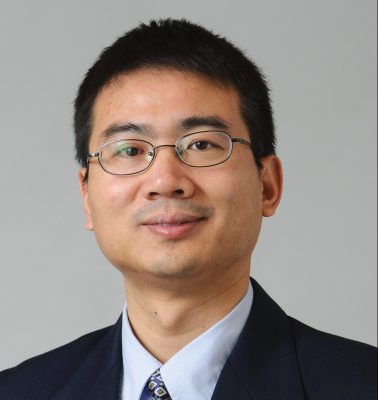
Luyi Sun
Board of Trustees Distinguished Professor Dr. Luyi Sun

Dr. Luyi Sun is a globally recognized materials scientist and professor in the Department of Chemical and Biomolecular Engineering at the University of Connecticut, where he also holds a joint appointment in the Institute of Materials Science. Since joining UConn in 2013, he has led an internationally renowned research program focused on nanostructured hybrid materials for functional, environmental, and energy-related applications.

Dr. Sun’s prolific contributions to science are evidenced by over 310 peer-reviewed journal articles in high-impact publications such as Nature Communications, Science Advances, Proceedings of the National Academy of Sciences, and Advanced Materials. His work has earned more than 23,000 citations and an h-index of 83, and has been highlighted by MIT Technology Review, Smithsonian Magazine, and New Scientist, among many others. He is the inventor or co-inventor of 28 issued U.S. patents and more than 50 corresponding foreign patents, seven of which have been commercialized/licensed. The materials and devices invented in his lab have been featured in global exhibitions, including at the Material ConneXion Library in New York and the Penn Museum.

Dr. Sun is a Fellow of the National Academy of Inventors, the Royal Society of Chemistry, and the Society of Plastics Engineers. He has also been recognized with the Morand Lambla Award from the Polymer Processing Society and was elected to the Connecticut Academy of Science and Engineering.

A dedicated educator and mentor, Dr. Sun has taught rigorous and interdisciplinary courses such as Thermodynamics and Polymer Processing, and has advised dozens of Ph.D. students, M.S. students and postdoctoral researchers, and more than 160 undergraduate research assistants. His students have gone on to successful careers in academia and industry, and many have received prestigious fellowships and national honors.

Dr. Sun has also demonstrated sustained leadership in academic and professional service. As Director of the UConn Polymer Program from 2018 to 2021, he expanded faculty engagement and strengthened the program’s profile. He has held leadership roles in national scientific organizations and organized more than 80 symposia around the world. His editorial work includes serving as Associate Editor of Advanced Composites and Hybrid Materials.

Due to his outstanding record of research innovation, teaching, mentorship, and professional service, Dr. Luyi Sun strongly merits recognition as a Board of Trustees Distinguished Professor.

The Institute of Materials Science enthusiastically congratulates Dr. Sun on this honor.

Polymer Program Alumni Feature: Mark Adams

April 22, 2025

By Paige Bjerke
IMS Written Communications Assistant

Mark Adams, '93
Mark Adams, ’93 Polymer Science

Mark Adams received his Ph.D. in Polymer Science from the University of Connecticut in 1993. After an 11-year tenure with Dow Chemical, Adams joined Henry Company in various vice president and senior vice president roles. Following his tenure at Henry Company, Adams joined Associated Materials, acting in senior vice president and later executive vice president positions. Since May of 2023, Adams serves as the Chief Operating Officer of HASA Inc., a large water treatment company based in southern California.

IMS News reached out to Adams with five questions about his breadth of professional experience since obtaining his Ph.D., and how his time at UConn shaped it. Adams shows us that with grit, passion, and a strong support system, career growth occurs naturally.

Why did you choose to pursue your Ph.D. in polymer science at UConn?  

My plan was to go to medical school after completing a B.S. in Chemistry from UConn. While working on my B.S., I took Physical Chemistry with Professor Andrew Garton. One day about halfway through the semester, he approached me after class and asked about what I was going to do after undergrad. I told him I was planning to go to medical school. He asked if I had ever considered grad school.

He went on to talk about an opportunity to go to the Institute of Materials Science for a Ph.D. in Polymer Science, working with him under a grant from NASA. Curious about the opportunity, I went to visit him at IMS, and the rest is history. I changed direction and worked to earn my Ph.D. on a research project for NASA, studying the degradation of polymeric spacecraft materials in the low earth orbit.

Who were some of the people who helped or inspired you most during your time at UConn, and how did their influence carry over into your professional career?

Obviously, Professor Garton had a huge impact on my academic career. He was incredibly energetic and excited about his research, which was infectious in his research group. When he passed away suddenly, prior to me completing my thesis, I was shocked and somewhat lost. My mentor in research was gone, and I was uncertain about the future and the choices I made. Fortunately, Sam Huang took me on to complete my degree.

Dr. Garton and other faculty at IMS taught me the importance of first principles and how to do research, but Dr. Garton is responsible for teaching me how to apply learning.  How to identify a problem, develop root cause, research/develop technology needed, and implement technology solutions. He also helped me develop continuous improvement skills that have become the backbone of my career. Advanced research is interesting and fun but, using that to develop products and solutions is exciting.

A lot of your professional experience is more on the business side rather than in a lab or research setting. How did your Ph.D. and heavy scientific background impact your trajectory for success in so many executive-level corporate roles? 

The first few roles early in my career were focused on technology and product development, which heavily leveraged my Ph.D. Successfully translating these efforts into value-creating opportunities required a complex voice of the customer requirements, which was only obtained and validated through observation and communication with end users. It’s at this interface where my unique skills started to develop, and when my career started taking turns from R&D leadership to new business development, sales, commercial leadership, and operations leadership. I have been fortunate to work with exceptional executive leaders that continually challenged and developed me, which has produced a myriad of different and challenging roles. This would not have been possible without the solid foundation I received from IMS and UConn.

What advice do you have for current polymer science students who may be unsure of their career paths? 

Figure out your “internal” job description as early as possible. In other words, determine what you like to do most in combination with the skills and experience you have developed. When you figure out what your internal job description is, and you find a role that matches, you will experience dramatically accelerated growth. In my case, that was away from pure and applied research, and more focused on deploying all kinds of chemistry and engineering to develop solutions that rapidly grow businesses. Once you figure that out, job opportunities come faster than will be comfortable.

What are you most proud of having accomplished so far in your current position, and what do you most hope to accomplish going forward?

I am currently the Chief Operations Officer at a specialty chemical company specializing in water treatment. This role is truly the culmination of all my years of experience in multiple functions and companies. I am responsible for Operations at 12 sites, Engineering, Product/Process Development, EH&S, Continuous Improvement, Quality, and Transportation.

My biggest accomplishment so far with this company has been successfully restructuring and realigning our engineering group into a segmented portfolio management approach. We had way too many projects, worked on all of them at once, with too few resources, and no prioritization. Everything was delayed and above budget. Now, we are executing on time and on budget across the board on a full spectrum of projects from large new site design-builds, down to site specific capex projects.

My biggest challenge is developing and implementing automation technology in our packaging plants. We still require too much manual labor in an environment that is ergonomically challenging. Also, working with hazardous and corrosive materials poses unique challenges to metals and circuitry, so we needed to develop materials, machines, and now robots that reliably operate in challenging environments with hazardous chemicals. I guess it’s kind of like my Ph.D. work that analyzed polymers in low earth orbit, also a challenging and unforgiving environment.

IMS News thanks Mark Adams very much for his willingness to share his unique journey, and we are excited to see where he takes HASA next.